Harmonizing Healthcare: The Interdisciplinary Effort Shaping the Future of Autism Therapy


A father I worked with for a long stretch — the details here are changed enough that he is, effectively, not one person but several — once asked me, after a particularly hard afternoon, whether autism therapy was something he was doing to his son or something he was doing with him. He had been to three appointments that week, with three different clinicians, and each one had told him a slightly different story about what should come next. The exhaustion in his voice was not really about the schedule. It was about the absence of a single thread tying it all together.
Autism therapy in 2026 is, at its best, that thread. About 1 in 31 children in the U.S. now has an autism diagnosis, and the families I sit with rarely come to a single clinician with a single question. They come with several questions at once, addressed to several disciplines that are not always speaking to each other. The interesting work — the work the literature is finally catching up to — is in how those disciplines coordinate.

What "interdisciplinary" actually means in autism therapy
For years "multidisciplinary care" was the published goal: a child sees several specialists, each writes a plan, the plans land in the family's lap to reconcile. The newer, harder, more useful frame is transdisciplinary care — disciplines that share a single plan rather than ship separate ones. A 2025 longitudinal study of 53 children and adolescents with confirmed autism, followed for 12 months under a transdisciplinary family-centered model, found that most participants reached high functional levels by the end of the follow-up window, and that the strongest predictor of progress was the depth of family involvement, not the intensity of any one discipline's intervention.
A small caution from the consulting room: "transdisciplinary" is the kind of word that sounds like architecture when it is actually a culture problem. It is hard, in practice, for an ABA therapist, a speech-language pathologist, and a developmental pediatrician to genuinely share a plan rather than negotiate one. A 2026 case study in Behavior Analysis in Practice describes a three-year transformation of an ABA-focused clinic into an interdisciplinary center, with the most striking shift being inter-discipline respect, slow to build and quick to lose. That is what the word is pointing at when it works.
What an interdisciplinary team typically holds together: a clinical psychologist or developmental pediatrician carrying the diagnostic picture and the overall care plan; a speech-language pathologist on communication, feeding, and sometimes social pragmatics; an occupational therapist on sensory regulation and daily-living skills; a physical therapist where motor coordination is part of the picture; an ABA or developmental-behavioral practitioner; and — the role most often missing — a family case manager who knows the names of everyone else and can hold continuity for the parents. The CDC's foundational treatment summary, which leans on the AAP's 2020 clinical guidance (Hyman et al., Pediatrics 2020;145(1):e20193447), treats coordination as assumed; in practice it is what families have to assemble themselves, and the evidence is gathering that doing it well changes outcomes.
The modalities, and how a team layers them
The most honest sentence about autism therapy I can give you, drawn verbatim from the CDC's evidence summary, is that "behavioral approaches have the most evidence for treating symptoms of ASD". Most of what follows is some version of that statement made specific.
Applied Behavior Analysis (ABA)
ABA is the most heavily-studied autism therapy by a wide margin and also the most controversial inside autistic communities. Both things are true. Contemporary ABA — particularly in its developmental and naturalistic forms — looks much less like its 1980s ancestor and much more like a play-based, child-led intervention that uses reinforcement to scaffold communication, regulation, and adaptive skills. When it is good, it is good. When it is delivered as drill, decoupled from the child's interests and the family's life, families notice; so does the child. If you are weighing an ABA program, the most useful questions are whether goals are written with the family, whether autistic adults are consulted on programme design, and what the clinic does when a child shows distress.
Speech-language therapy for autism
Speech-language pathologists do far more than articulation work. In an integrated plan, the SLP typically handles expressive and receptive language goals, pragmatic and social-communication skills, augmentative and alternative communication (AAC) introduction for non-speaking or unreliably-speaking children, and — often quietly — feeding and oral-motor work. Communication is usually where families feel progress first, which is why this discipline is also where motivation for the rest of the plan often lives.
Occupational therapy for autism
The simplest description of paediatric OT is that it works on the skills a child needs to do the things a child does: dressing, eating, handwriting, riding a bike, tolerating a haircut. The deeper work, in autism, is in sensory regulation — helping a child stay inside what we sometimes call the window of tolerance, where learning and connection are actually available. Sensory-based interventions remain mixed in the evidence base, but the day-to-day OT work on adaptive skills and environmental adjustment is among the most quietly transformative parts of an integrated plan.
Physical therapy for autism
Physical therapy is the modality families most often skip and most often regret skipping. Motor coordination, gait, postural control, and gross-motor confidence track more closely with autism than the older literature acknowledged. A child whose body does not feel reliable to them rarely engages well with the social and language work the rest of the team is trying to do. A short course of paediatric PT, indicated and not, is often the unblocking step.
The team in 2026
Pulling these threads together: families almost always need a combination, sequenced thoughtfully, rather than a single modality delivered intensively. The decision-stage question ("what is the best therapy for autism?") almost never has a single-modality answer. The team is the answer.
Early intervention — the 0–3 window and the access gap
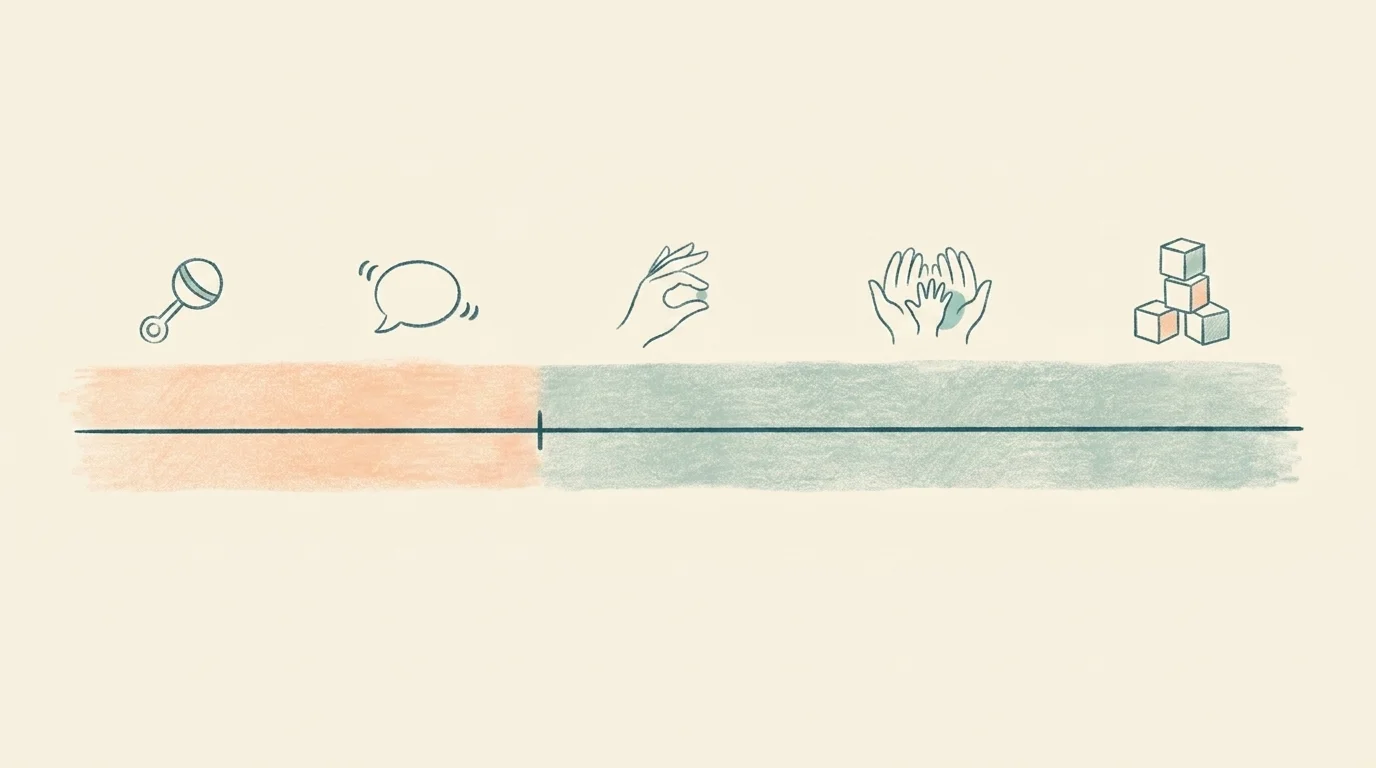
The published evidence for early, intensive intervention is among the strongest things we have. The Early Start Denver Model (ESDM), the most rigorously studied early-intervention programme, is used with children between 12 and 48 months of age. A 2025 Cureus narrative review summarises the field bluntly: early intensive behavioural and developmental interventions are associated with IQ gains of nine to fifteen points and meaningful language gains, with effects on core autism symptoms more variable.
What the headline numbers obscure is the access question. A 2025 Autism Research paper from Lidstone and colleagues found that the children most likely to actually access early intervention before age 2 are those diagnosed before age 2, from higher-income families, and — for reasons not fully understood — lower-birth-weight infants. The 0–3 window, in other words, is a real biological opportunity and an uneven social one. For families inside the eligible window: every month inside the public system is non-trivial. For families outside it: the timeline of "earlier is better" is true, and not so true that catching up later is impossible, and the work of the rest of childhood is exactly that catching-up.
The first 90 days with an integrated team
For families who have just received a diagnosis, the most useful map I can offer is what the first three months of integrated care actually look like, not in the brochure version but in the version that happens.
In the first month, the clinical psychologist or developmental pediatrician carrying the case usually does a full diagnostic and functional picture: standardised assessment, parent interview, often a school observation, and an initial conversation about the family's actual life — sleep, siblings, work hours, who else is at the kitchen table. The plan that emerges from this is the spine the rest of the team works from, and getting it right matters more than getting it fast.
In the second month, the speech-language and occupational therapists usually do their own evaluations and write goals that map onto the same plan rather than alongside it. If physical therapy is indicated, that referral lands here. If ABA or developmental-behavioural therapy is part of the plan, the same is true; the goal is for one set of priorities, not five competing ones.
In the third month, the team should be doing what is often the missing piece: a coordination meeting, with the family in the room, where progress, friction, and parents' own questions are addressed across disciplines at once. If your team does not do this, ask for it. The version of integrated care that changes outcomes is the version where the disciplines are talking to each other in front of the people they are talking about.
What works alongside therapy — and what 2025 de-evidenced
The older version of "holistic" autism care treated nutrition, complementary medicine, behavioural therapy, and conventional medicine as roughly interchangeable parts of a single plan. The honest version, in 2026, is more careful. A December 2025 umbrella review reported by ScienceDaily found little reliable evidence for several popular complementary approaches — standalone probiotics, acupuncture, and music therapy as a standalone treatment — to alter the trajectory of autism in any measurable way.
This does not mean those things are useless. Music can be a regulation tool inside a therapeutic relationship; nutrition matters, particularly where feeding selectivity is severe; complementary practices that bring families calm and connection are not nothing. What it means is that they belong inside the plan as supports, not as the plan. A small caution: families should not stop existing care without speaking to the team coordinating it. The thing that has actually been de-evidenced is the claim that any of these, used alone, alters the underlying picture.
A short word on medication
The CDC's most-quoted sentence on this is also its most accurate: "There are no medications that treat the core symptoms of ASD." Medications are sometimes useful for co-occurring conditions — anxiety, sleep difficulties, ADHD-style attention challenges, and the irritability that can sit alongside any of the above. They are not the spine of the plan; they are sometimes a useful brace inside it. Decisions about medication for an autistic child — particularly off-label psychiatric prescriptions for anxiety or sleep — should be made with a clinician who knows the child, not from an article. That is not a hedge; it is the actual standard of care.
Precision medicine: what the four-subtype work changed
For years "precision medicine in autism" was an aspiration with very little underneath it. In 2025 that changed in a substantive way. Princeton researchers, using machine learning on data from over 5,000 children, identified four biologically distinct autism subtypes, and parallel work that year began to catalogue roughly 2,500 genes potentially contributing to autism. The four-subtype finding does not yet drive clinical decisions — it is too recent and the subtypes are not yet operationalised at the point of care — but it is the empirical floor under a sentence that, until 2025, was mostly a sentence.
What this means for a family's plan in 2026: not very much yet, in direct terms. Personalisation is still done discipline by discipline, with the family. What it means for the field: that the long-running argument over whether autism is one thing or several has been answered in a way that will shape the next decade of intervention research.
What's actually on the research frontier in 2025–2026
A few 2025 developments belong in any honest "future of therapy" conversation, with the hedging they deserve. Stanford work in 2025 identified hyperactivity in the reticular thalamic nucleus as a candidate mechanism in autism-associated behaviours; experimental drugs and neuromodulation reversed autism-like symptoms in mice. That is preclinical. It is not, in 2026, a treatment offered to a child anywhere. It is, however, a real lead.
On the genetic-medicine side, antisense oligonucleotides (ASOs), CRISPR-based tools, and RNA-repair strategies have moved from animal models toward human trials, with the first human studies concentrated in autism-spectrum-adjacent monogenic conditions — Angelman syndrome and Rett syndrome — where a single gene gives the work somewhere to start. For the broader autism population, where the genetic picture is the polygenic 2,500-gene cloud the Princeton-adjacent work is mapping, the path is longer and more uncertain. None of this is currently available to families, and the most useful thing any honest clinician can say about it is: keep an eye on it; do not let it change the plan you are running this year.
Assistive technology in 2026
The "high-tech" part of autism therapy looks substantially different now from the abstract framing it once carried. The concrete picture in 2026: augmentative and alternative communication apps in the Proloquo2Go family, running on tablets a school district can actually afford to provision, remain the workhorse for non-speaking and unreliably-speaking children. Wearable physiological monitors that track heart-rate variability and skin conductance give families and OTs a more honest read on a child's regulation state than parent intuition alone. Eye-tracking communication systems, once expensive enough to be a research curiosity, are now in the hands of more clinics. AI-driven social-skills practice tools are early — promising for some children, useless or aversive for others, and not yet a substitute for human relational work.
The principle running underneath all of this is that the technology is useful where it is held by someone in the team — an SLP for AAC, an OT for wearables — and where it stays in dialogue with the child's real life. Untethered tech tends not to land. Tethered tech, sometimes, is genuinely transformative.
What this all comes back to
I want to say something careful, in closing, about the word "future" in the title at the top of this piece. The future of autism therapy is not, mostly, the genetic medicines or the neuromodulation work, useful as those leads may turn out to be. The future of autism therapy is the slow, unglamorous, structural work of getting the disciplines that already exist to actually share a plan. The transdisciplinary cohort in the 2025 study did well because the team around them held a single thread. The 2026 BAP case study turned an ABA clinic into something more useful because the staff slowly built the inter-discipline respect the model required. None of that is breakthrough work in the press-release sense. All of it is the work that actually moves a child's life.
The father I described at the start of this piece eventually had a coordination meeting with his son's team, on his own initiative, in a small room with several chairs in it. He told me afterwards that the most useful sentence of the afternoon came from the speech pathologist, who said: "I think we are all working on roughly the same problem, just from different sides of it." That sentence is, I think, what an interdisciplinary approach is for. It is not a prescription. It is a way of holding a child's care that is good-enough — in Winnicott's specific sense — to make the rest of it possible.
Frequently Asked Questions
Behavioral approaches — particularly Applied Behavior Analysis (ABA) and the Early Start Denver Model (ESDM) — have the most published evidence, according to the CDC's 2024 treatment summary. Most children benefit from a combination of ABA, speech therapy, occupational therapy, and psychological support coordinated by an interdisciplinary team rather than any single modality delivered alone.
Earlier is better. The Early Start Denver Model is studied in children 12–48 months of age, and a 2025 Cureus narrative review found early intensive intervention is associated with IQ gains of 9–15 points and meaningful language gains. The 0–3 window is the highest-yield period, though a 2025 Autism Research paper (Lidstone et al.) documents that access remains uneven across families.
A typical integrated team includes a clinical psychologist or developmental pediatrician (diagnosis and care plan), a speech-language pathologist (communication, feeding, AAC), an occupational therapist (sensory regulation and daily-living skills), a physical therapist where motor coordination is part of the picture, an ABA or developmental-behavioural therapist, and a family case manager who holds continuity across the team.
No. The CDC states clearly that there are no medications that treat the core symptoms of autism. Medications are sometimes prescribed to address co-occurring conditions — anxiety, sleep difficulties, attention challenges, irritability — under the care of a clinician who knows the child. They are a support inside the plan, not the plan itself.
Three developments stand out. Princeton researchers used machine learning on data from over 5,000 children to identify four biologically distinct autism subtypes, with a parallel effort cataloguing roughly 2,500 candidate genes. Stanford preclinical work identified the reticular thalamic nucleus as a candidate target for symptom relief in animal models. And antisense-oligonucleotide and CRISPR-based therapies advanced toward human trials in autism-spectrum-adjacent genetic conditions such as Angelman syndrome and Rett syndrome. All remain experimental; current best practice remains interdisciplinary behavioural and developmental care.