Holistic Health and Wellness: Promoting Well-Being in Autistic Children


A useful starting point for any conversation about holistic health in autistic children — and autism nutrition specifically — is a number from the December 2024 systematic review in World Journal of Clinical Pediatrics, which synthesised 316 studies: roughly 70 per cent of autistic individuals experience some form of gastrointestinal symptom — constipation, diarrhoea, reflux, abdominal pain. A second number, from Autism Speaks's nutrition page, is that autistic children are about five times more likely than neurotypical children to face mealtime challenges: tantrums, extreme food selectivity, ritualistic eating. With current US prevalence at roughly 1 in 36 children, both numbers describe a very large daily problem, not an edge case. They also place autism nutrition where it belongs — as a clinical concern, not a wellness aside.
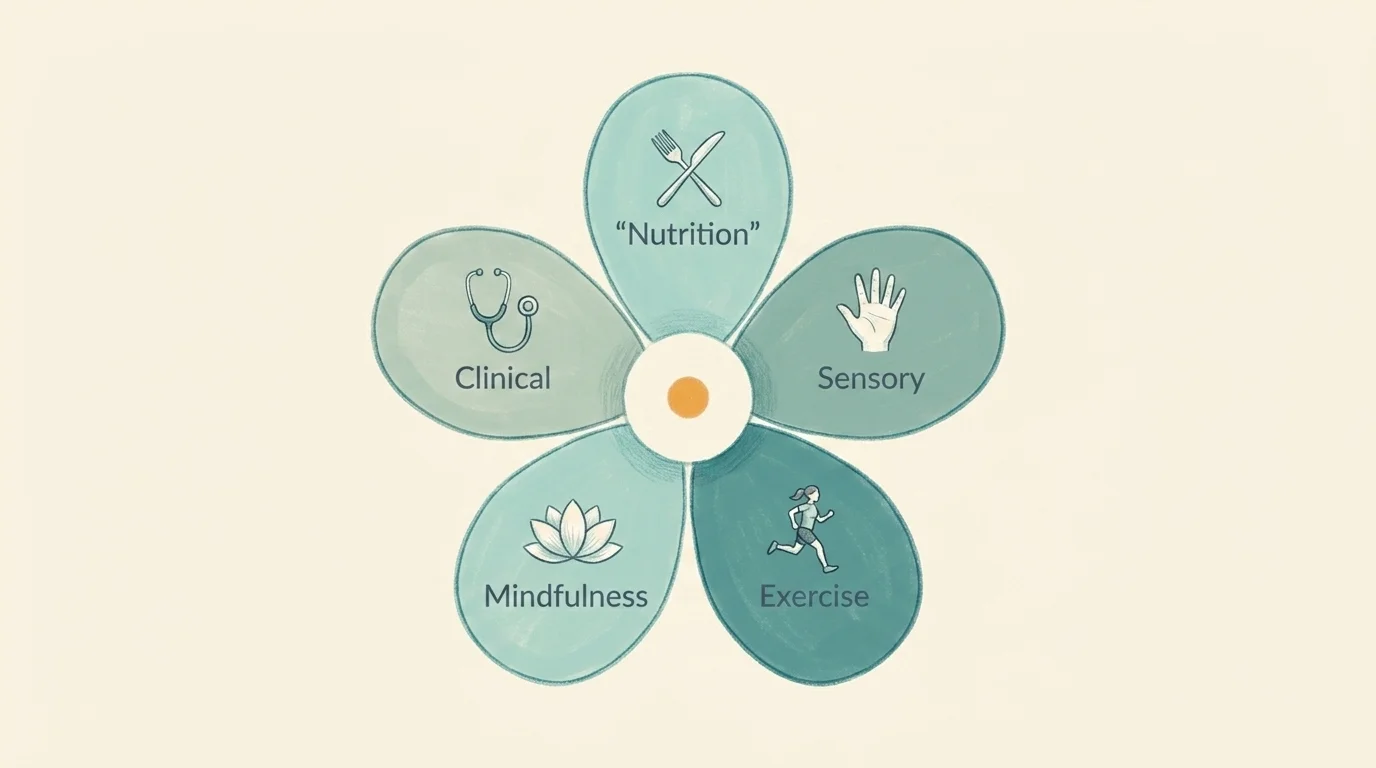
This guide walks through the five pillars of autism nutrition, sensory integration, exercise, mindfulness, and the gating clinical-care decisions that hold them together — anchored to 2024 and 2025 peer-reviewed evidence. It is not a prescription. It is what the literature currently looks like when read carefully.
Pillar 1: Nutrition, with the evidence in some order
The nutrition advice an autistic child needs is, frustratingly, more specific than "eat wholesome foods." Two findings from the recent literature are worth holding in mind before going further.
First, autistic children, on average, eat measurably less of several nutrients than their neurotypical peers. A systematic review in Nutrition Reviews reported significantly lower intakes of protein, calcium, vitamins A, D, K, folate, riboflavin, thiamine, and niacin. The mechanism is not exotic — it is selectivity. A child who eats six foods is likely to be deficient in something, regardless of how nutrient-dense those six foods are.
Second, the strongest 2025 evidence for a whole-pattern dietary intervention is for the Mediterranean diet, not the gluten-free, casein-free protocol that dominates most of the popular conversation. A 2025 scoping review in PMC reported that 70 per cent of children with autism or ADHD on a Mediterranean-style diet showed significant ADHD symptom improvement, 80 per cent showed improvement in depression scores, and 50 per cent in anxiety.
Here is the part the press release left out. A scoping review is not a randomised controlled trial. The 70/80/50 numbers come from observational and pre-post designs, not blinded comparisons. The honest read is that Mediterranean dietary patterns — fish, olive oil, vegetables, legumes, whole grains, modest dairy — are the strongest current candidate for a whole-pattern intervention, but the evidence is encouraging rather than definitive. If a family has the bandwidth to shift in that direction, the cost-to-evidence ratio is unusually favourable.
Best foods for autism: a working short list
These are not magic foods. They are nutrient-dense items that map directly to the deficits the literature documents and that fit a Mediterranean-pattern diet:
- Fatty fish (salmon, sardines, mackerel) — omega-3 EPA/DHA, vitamin D, complete protein.
- Eggs — choline, vitamin B12, vitamin D, complete protein.
- Leafy greens (spinach, kale, broccoli) — folate, vitamin K, magnesium, fibre.
- Avocado — monounsaturated fat, fibre, potassium.
- Olive oil — the structural fat of the Mediterranean pattern.
- Legumes (lentils, chickpeas, beans) — plant protein, iron, folate, fibre.
- Berries (blueberries, strawberries) — polyphenols, vitamin C.
- Whole grains (oats, brown rice, quinoa) — fibre, B vitamins.
- Nuts and seeds (walnuts, chia, flax) — plant omega-3, magnesium, zinc.
- Fermented foods (kefir, yogurt with live cultures, sauerkraut) — probiotic exposure (see gut-brain axis below).
Selectivity is the central practical problem. Building a list like this is the easy part; getting it past a child who eats six foods is the work, and the work is usually slow. A registered dietitian who specialises in autism is, in my reading of the evidence, the highest-leverage professional a family with severe selectivity can engage.
The gut-brain axis, briefly
The 2024 PMC review's other consequential conclusion is that "the gut-brain axis plays a significant role in ASD" — alterations in gut microbiota composition compared to neurotypical children are now a consensus finding rather than a hypothesis, and selective eating restricts microbial diversity in ways that appear to feed back into behavioural symptoms.
The probiotic literature is starting to follow. The Autism Research Institute's 2026 update summarised a systematic review of 10 completed and 18 ongoing RCTs and concluded that probiotics, used appropriately, "drastically improve gastrointestinal symptoms," improve some social behaviours, and positively alter the gut microbiome. The honest caveat: 18 of the 28 RCTs are still ongoing. The completed evidence is supportive but smaller than the eventual evidence base will be. Strain selection, dose, and duration are not yet standardised; this is not the field to self-prescribe in.
Supplements: what is actually deficient
The 2024 PMC systematic review and the Nutrition Reviews intake study converge on the same shortlist of micronutrients commonly low in autistic children: vitamin D, B vitamins (especially B6, B12, folate), iron, zinc, omega-3 fatty acids, magnesium, and calcium.
The honest version of supplement advice: test before supplementing — don't guess. A pediatrician can order serum vitamin D, ferritin, B12, and zinc panels; a registered dietitian can quantify dietary intake against current shortfalls. Supplementing without testing is how a family ends up with vitamin A toxicity or iron overload in a child who didn't actually need either.
A note on the 2025 amino acid finding that made several headlines: a ScienceDaily report covered laboratory work showing that a low-dose mix of zinc, serine, and branched-chain amino acids restored typical synaptic protein patterns and reduced excessive amygdala activity in autism mouse models. The italics matter. Mouse-model results sit a long distance from a child-ready intervention. The work is interesting; treating it as actionable for a human child is, today, premature.
GFCF: the honest version
Searches for "gluten free autism" have surged 125 per cent quarter-on-quarter, which makes an honest treatment of the GFCF (gluten-free, casein-free) protocol overdue. The current evidence is mixed. GFCF appears to help a subset of children, particularly those with documented gastrointestinal symptoms or specific food sensitivities. It also carries real risks if poorly implemented: deficiencies in calcium, vitamin D, fibre, and B vitamins are well-documented complications of casual GFCF adoption.
If GFCF is on the table for your family, the only defensible path is to do it under the supervision of a registered dietitian, with baseline labs and follow-up monitoring. The protocol is not low-stakes. The "try it and see" framing common in social-media autism communities ignores the deficiency risk.
Pillar 2: Sensory integration, with a real evidence base now
The clinical conversation about sensory integration in autistic children spent two decades in a strange state: parents and occupational therapists treated it as standard care, while the formal evidence base lagged. That gap closed in 2025.
A 2025 systematic review in Frontiers in Pediatrics and a separate 2025 comparative trial by Schaaf and colleagues in Autism Research classified Ayres Sensory Integration (OT-ASI) as evidence-based for autistic children aged roughly 4 to 12. The Schaaf trial reported outcomes equivalent to ABA on individualised goals and daily-living skills — a meaningful result, because OT-ASI and ABA come from very different theoretical traditions and are usually treated as alternatives rather than equivalents.
Sensory integration differences affect somewhere between 5 per cent and 25 per cent of US children overall, with markedly higher prevalence in autistic children. The practical version is that OT-ASI delivered by a trained occupational therapist, in a clinic with the necessary equipment (suspended swings, weighted materials, climbing frames), is now a defensible first-line option — not the second-best alternative to behavioural therapy it has often been treated as.
A small caveat. "Sensory diet" is the popular shorthand for the parent-implemented version of this work, and the evidence for ad-hoc parent-led sensory diets, without OT involvement, is much thinner. The OT does the assessment; the family does the daily work; the literature supports this combination, not either part alone.
Pillar 3: Exercise, the easy ranking with the real evidence
Of all five pillars, exercise has the most lopsided ratio of evidence to popular coverage. A 2025 systematic review and meta-analysis of RCTs in Frontiers in Pediatrics found that physical exercise reliably improves social, behavioural, and motor skills in autistic children, with most studies running 8 to 12 weeks. The named modalities with consistent evidence are:
- Yoga — an 8-week program for ages 7 to 15 significantly improved sociability, cognitive and sensory awareness, and physical behaviour.
- Swimming — combines cardiovascular work with deep-pressure proprioceptive input that many autistic children find regulating.
- Trampoline — vestibular and proprioceptive input plus aerobic work; widely used in OT settings.
- Martial arts — structured, ritualised, and progress-marked in a way many autistic children find motivating.
- Cycling — outdoor, repetitive, and self-paced.
The 8-to-12-week duration is worth holding onto. It explains why one drop-in trampoline session does not produce the effects a parent might hope for, and why most of the benefit appears in the second half of a sustained program.
Pillar 4: Mindfulness, with one important dose caveat
The mindfulness section of most autism wellness articles reads as if the evidence base were aspirational. As of 2025 it is not. A 2025 meta-analysis in Frontiers in Psychology found that mindfulness-based interventions significantly improved social responsiveness in autistic children and significantly reduced parental stress, anxiety, and depression. Both halves of that finding matter; the parental-outcome arm is large enough on its own to recommend the practice.
The much-cited dose figure — 10 to 15 minutes per day, six weeks — comes from MIT's May 2025 study in autistic adults. It is a useful starting point but not a child-validated dose. A reasonable starting practice with younger children is shorter (3 to 5 minutes), parent-co-practiced, and grounded in concrete sensory anchors (a breath count, a body scan, a focus on a single sound) rather than abstract awareness instructions, which tend to land poorly with monotropic attention styles.

Pillar 5: Mental health and the integration question
Mental health is the pillar most likely to be invoked vaguely and described concretely least often. The integrative version of the four pillars above already contributes meaningfully to it: the Mediterranean diet evidence shows depression and anxiety symptom improvements; OT-ASI improves daily-living function and reduces sensory-driven distress; exercise improves behavioural regulation; mindfulness improves social responsiveness and reduces parental stress, which feeds back into the child's affective environment.
What this pillar adds, as a discrete item, is the question of when to engage a child psychologist or psychiatrist. The triage criteria sit in the next section.
When to consult a professional
This is the gating section. If any of the following are present, the next step is not a different supplement or a new diet — it is a clinical conversation.
- A pediatrician (urgent): persistent gastrointestinal symptoms (constipation, diarrhoea, reflux), growth or weight concerns, dramatic behavioural regression tied to mealtimes, suspected swallowing or chewing difficulty.
- A registered dietitian (RD or RDN) specialising in autism (before any major change): extreme food selectivity (fewer than roughly 20 accepted foods), before starting any elimination diet (GFCF, ketogenic, SCD, GAPS), before starting any supplement protocol, when documented intake of any of the commonly deficient nutrients is concerning.
- An occupational therapist (for sensory work): suspected sensory processing differences affecting daily function, before starting a "sensory diet," before purchasing specialist equipment.
- A child psychologist or psychiatrist: persistent anxiety, depression, sleep disturbance, suicidal ideation, behavioural escalation that exceeds family capacity, or any safety concern. For acute mental health crises, a national crisis line is the appropriate first contact.
Self-experimenting on diet, supplements, or sensory protocols without these professional gates is not "trying things." It is, more often than the wellness internet acknowledges, how families end up with new problems. Test before supplementing. Plan before eliminating. Assess before equipping.
An integrated day, in rough sketch
A small caveat before sketching this. There is no validated daily routine for autistic-child holistic wellness; the integration question is what the literature has not yet answered as a single integrated trial. What follows is one defensible reading of the five pillars, not a prescription.
A morning that includes a Mediterranean-pattern breakfast (eggs, fruit, whole grains, olive oil somewhere), a brief sensory regulating activity (trampoline, swing, weighted vest depending on the child's profile), and a short parent-co-practiced mindfulness moment (3 to 5 minutes of a sensory anchor) covers three pillars before school. A school day that protects the child's special interests and offers movement breaks covers the exercise and mental-health pillars in absentia. An afternoon that includes a 30-to-45-minute exercise block — yoga, swimming, trampoline, martial arts, or cycling, picked for the child's preference — and an evening that maintains the dietary pattern and includes adequate sleep covers the rest.
This is sketch, not protocol. The right version, for a specific child, is the one their dietitian, OT, and pediatrician have helped the family build.

The honest summary
The five-pillar holistic frame for autistic children's wellbeing now has a more credible evidence base than it did two years ago. Mediterranean dietary patterns, OT-led sensory integration, sustained 8-to-12-week exercise programs, mindfulness with appropriate dose adjustment, and properly gated clinical care — each of these is supported by at least one 2024 or 2025 peer-reviewed source. Much of the popular wellness writing on this topic still operates on an older evidence base. It is worth knowing that the floor has moved.
What has not changed is the gating. The literature consistently rewards interventions delivered with professional involvement and consistently reports complications when interventions are tried casually. The honest version of holistic wellness is slower, less photogenic, and more clinically tethered than most of what gets shared on the internet — and, on the current evidence, more likely to help.
Frequently Asked Questions
Roughly 70% of autistic individuals experience some form of gastrointestinal symptom, autistic children are about five times more likely than neurotypical children to face mealtime challenges, and sensory integration differences are markedly more common in autism. Mental and physical wellbeing are interdependent — Mediterranean dietary patterns reduce reported anxiety and depression, sensory integration therapy improves daily-living function, and sustained exercise programs improve behavioural regulation. Treating any pillar in isolation underestimates how much each affects the others.
Autistic children, on average, consume significantly less protein, calcium, vitamin D, vitamin K, folate, and several B vitamins than neurotypical peers. Mediterranean-pattern diets — fish, olive oil, vegetables, legumes, whole grains — show the strongest 2025 evidence among whole-pattern interventions, with reported improvements in ADHD, depression, and anxiety symptoms. Severe selectivity is the central practical problem and warrants involvement of a registered dietitian who specialises in autism.
A 2025 systematic review and meta-analysis in Frontiers in Pediatrics confirmed that physical exercise improves social, behavioural, and motor skills in autistic children. Yoga, swimming, trampoline, martial arts, and cycling all have supportive RCT evidence. Most studies ran 8 to 12 weeks — meaning one drop-in session is unlikely to produce the effects the literature describes.
A 2025 scoping review found 70% of children with autism or ADHD on a Mediterranean diet showed significant ADHD symptom improvement, 80% improvement in depression, and 50% in anxiety. The evidence is encouraging rather than definitive — these are observational and pre-post numbers, not blinded RCT outcomes — but the Mediterranean pattern is currently the strongest whole-pattern dietary candidate. GFCF and ketogenic diets show benefits for specific subgroups but require professional supervision.
Evidence is mixed. GFCF appears to help a subset of children, particularly those with documented gastrointestinal symptoms or specific food sensitivities, but it carries real risks of new deficiencies in calcium, vitamin D, fibre, and B vitamins if poorly implemented. The only defensible path is supervision by a registered dietitian, with baseline labs and follow-up monitoring.
Vitamin D, B vitamins (B6, B12, folate), iron, zinc, omega-3 fatty acids, magnesium, and calcium are the most commonly low across the 2024 PMC systematic review and the Nutrition Reviews intake study. The honest version of supplement advice: test before supplementing — don't guess. Supplementing without baseline labs is how families end up with vitamin A toxicity or iron overload in a child who didn't need either.
Yes — Ayres Sensory Integration (OT-ASI) is now classified as evidence-based for autistic children aged roughly 4 to 12. A 2025 comparative trial by Schaaf and colleagues in Autism Research reported outcomes equivalent to ABA on individualised goals and daily-living skills. The evidence supports OT-led work specifically; ad-hoc parent-implemented sensory diets without OT involvement have a much thinner evidence base.
A 2025 meta-analysis in Frontiers in Psychology found mindfulness-based interventions significantly improve social responsiveness in autistic children and significantly reduce parental stress and anxiety. The widely-cited 10-to-15-minute daily dose comes from MIT's 2025 study in autistic adults, not children. A reasonable starting practice for younger children is shorter (3–5 minutes), parent-co-practiced, and grounded in concrete sensory anchors.
See a pediatrician for persistent gastrointestinal symptoms, growth or weight concerns, or behavioural regression tied to mealtimes. See a registered dietitian before any major dietary change (especially elimination diets like GFCF) and before any supplement protocol. See an occupational therapist for suspected sensory processing differences. See a child psychologist or psychiatrist for persistent anxiety, depression, sleep disturbance, or any safety concern. For US mental health crises, contact 988 (call or text).